
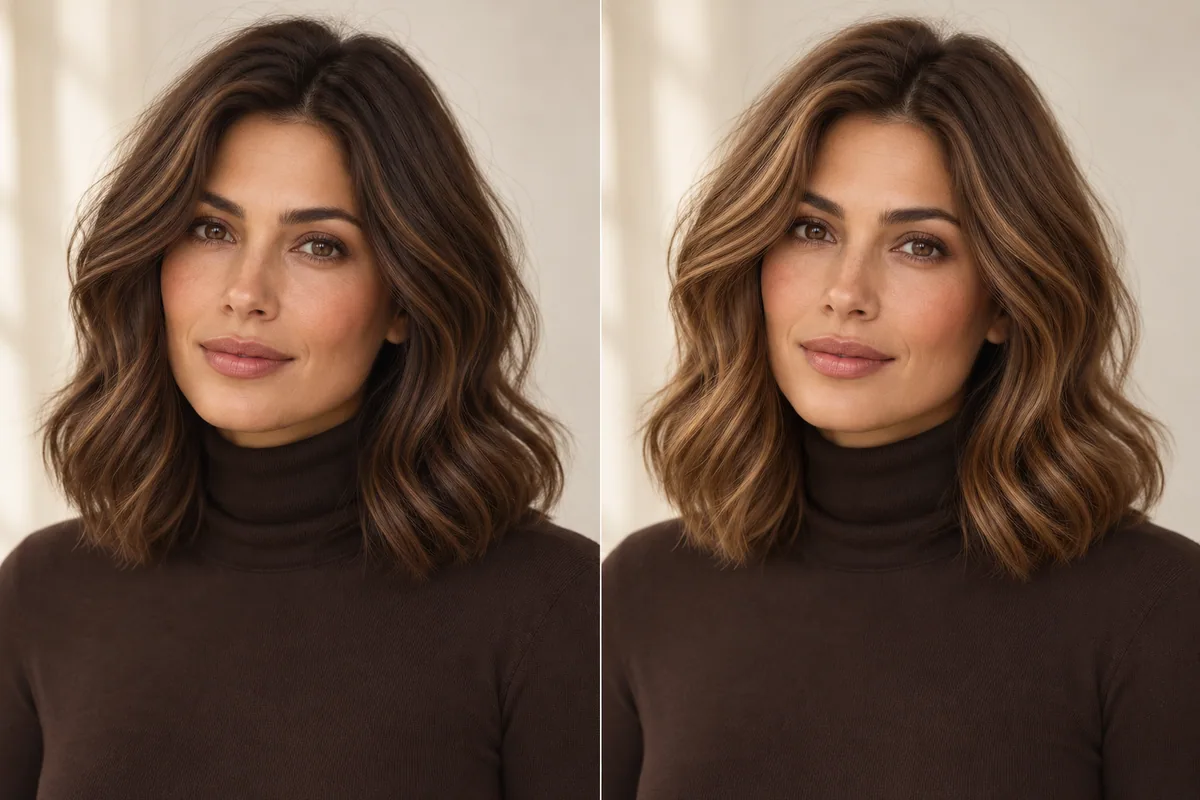
Teddy bear brown hair usually describes a soft, warm brunette direction with golden or honey-toned dimension. It is a reference label rather than one standardized shade. To choose a version you will actually like, separate how light the brown looks, how warm it feels and where the brighter pieces appear.
One saved picture may look like a rich brunette with a little glow. Another may sit much closer to bronde. If you like both, you have not made a bad choice—you have found a range that needs narrowing before it becomes a color request.
Use the trend name to start the conversation
In Vogue's teddy bear brown feature, the interviewed colorists place the direction between brunette and bronde and discuss warmer, honey-looking elements. That gives the label some context. It does not establish a formula or tell a colorist what result you want on your starting hair.
Choose a photograph that represents your preferred version, then describe what you can actually see. “A medium brown with a soft golden impression” is more specific than “the teddy bear shade everyone has.” Add whether you want the lighter areas to be barely noticeable or a clear feature.
Do not worry if another reference uses a different name for a similar appearance. The goal is agreement on the image, not perfect agreement on the vocabulary attached to it.
First, choose the brunette depth
Hide the brightest pieces in your reference with your fingers and look at the remaining brown. Do you want that base impression? Now uncover the lighter areas. Is the appeal mainly the contrast they create, or do you want the whole head to look lighter?
This is a useful distinction when a photo has a dark root area and a much brighter front. You may describe it as a soft brunette while a colorist sees a request for a more noticeable overall change. Point to the areas separately.
Save a darker boundary reference and a lighter one. Write what you do not want about each. For example: “This reads deeper than I want indoors” or “This is closer to blonde than I have in mind.” Those notes help narrow the range without inventing a universal shade level.
Then choose how much golden warmth you enjoy
Compare references at a similar apparent depth. A lighter brunette may look warmer simply because the brighter areas draw your attention. If the depth changes greatly between the pictures, your preference may be about lightness rather than the specific golden tone.
Use ordinary language: softly golden, more honey-looking, quite neutral, or warmer than I want. A stylist can translate a clear visual preference into a professional color conversation. You do not need to arrive with a chemical recipe.
If you discover that you prefer the cooler reference, read ash brown versus neutral brown or the chocolate-ash brown guide. Teddy bear brown is a useful direction to explore, not a label you must keep after comparing.
Decide where the brighter-looking pieces belong
Look at the front, the upper lengths and the ends independently. Would you like the most visible brightness beside the face? Would you rather have a softer difference through the lengths? Do you prefer a fairly consistent brown from top to bottom?
Use a simple map rather than circling every attractive strand. Mark one area where you welcome brightness and one where you would prefer to keep depth. Ask the colorist what approach could produce that appearance on the starting hair.
On a small screen, swipe the table to compare every column.
| Choice to make | A useful reference observation | A question for the colorist |
|---|---|---|
| Overall depth | The brown still reads clearly brunette | How would this depth compare with my current hair? |
| Warmth | The reflection looks softly golden rather than strongly red | What tones are giving this particular reference its warmth? |
| Contrast | The brighter areas blend gently or stand out clearly | How much visible difference would this plan create? |
| Placement | The lightness is strongest near the front, through the lengths or at the ends | Which areas would you change to create that appearance? |
The visual map does not select a technique by itself. Our balayage, highlights and ombré comparison explains why the finished look and the service name are related but different questions.
Read the color in more than one kind of light
A warm brown photographed beside a bright window can look different from the same direction under indoor lighting. Before deciding that two references show different colors, check the lighting, exposure and surrounding colors.
Look for another view of your favorite reference if one is available. Bring your own current-hair photo in ordinary light as well. The point is not to turn the appointment into a technical color analysis; it is to avoid asking for a sunlight reflection as though it were an all-day appearance.
The illustration above keeps the portrait styling similar to make the color directions easier to compare. It remains generated inspiration. Neither version establishes an achievable result on your hair or proves how it will look in a particular room.
Discuss upkeep from your starting point
The same trend name can lead to different appointments for different people. Tell the colorist about your current color and any relevant previous color work, then ask how that starting point affects the plan and future visits.
Instead of asking whether teddy bear brown is automatically low maintenance, describe what you are comfortable maintaining. You may prefer a quieter root-to-length contrast, a subtler change or a plan that leaves certain areas alone. The professional assessment determines how those preferences relate to your hair.
Our hair-color choice guide helps organize those priorities without recommending a dye formula or promising an upkeep schedule.
Compare a warm brunette direction in Hair Magic
Start with a clear photo and keep your current hairstyle for a color-only preview. Explore the available brunette shades and dimensional options closest to the appearance you have chosen. The app may use a different name from your reference, so choose the closest available color direction.
Keep the cut and texture similar between comparisons. If one preview adds a dramatic blowout, separate your reaction to the styling from your reaction to the color. The hair color changer guide explains the process, and the balayage preview guide covers exploring dimensional placement.
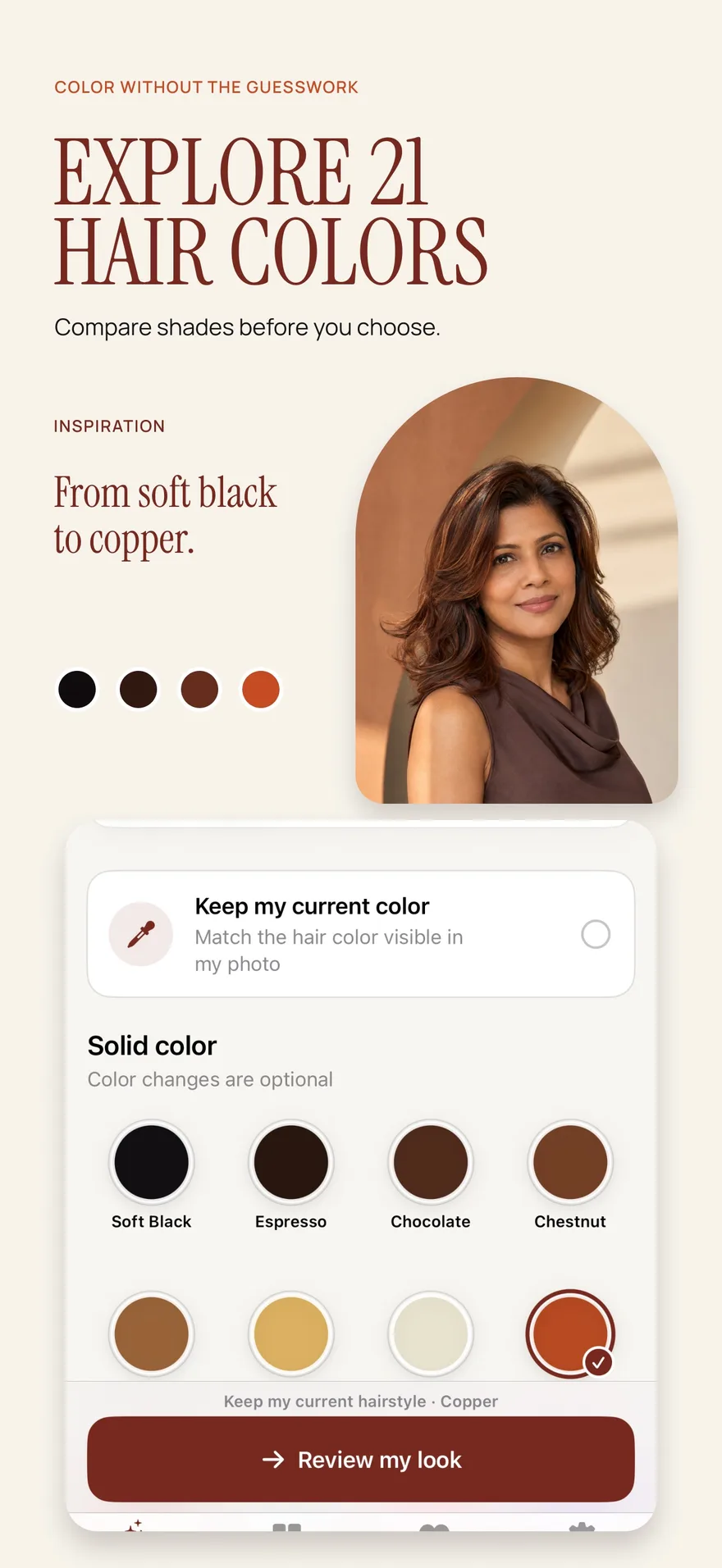
Source: App Store screenshot, captured 8 September 2026. Portraits are style inspiration.
When you tap Generate, your photo is uploaded for cloud processing and internet is required. Review the preview beside the original. Notice whether you prefer the overall depth, warmth and contrast. The result cannot assess previous dye, predict chemical processing or establish an exact salon formula.
Hair Magic is free to download with in-app purchases. Current preview access is shown in the app. Save an image that helps explain the direction, alongside the real reference and a note about which areas matter.
Leave with a color request you can point to
Complete this short reference card: “Keep the overall brown around this depth. I like this amount of golden warmth. Put the most noticeable brightness here. This other image is lighter or warmer than I want.”
Use a Salon Card for the selected style, color and practical notes. Ask the colorist to explain what they would adapt from the reference and why. You can keep the appealing softness of the teddy bear brown idea while choosing a version that is much more specific than its name.
About this guidance. Published by Hair Magic, the app discussed here. Product details are based on the Hair Magic App Store listing, checked on 1 November 2026. This is planning guidance, not a professional assessment of your hair. AI previews are visual estimates; features and prices may change.
Read our editorial approach or explore all journal articles.